18 November 2026 | Centre Cultural La Nau, Universitat de València, Spain
On 18 November 2026, ChemiNova participated in the 3rd Meeting of the Ibero-American Network of University Heritage, held at the Universitat de València from 18 to 20 November under the theme “Heritage at Risk: From Protection to Safeguarding. The Role of Universities in Ibero-America”.
The project contributed to the programme through two complementary activities: a workshop introducing digital technologies for heritage inspection and citizen engagement, and a scientific presentation examining the safeguarding of contemporary artworks affected by the October 2024 floods in Valencia.
From technical diagnosis to citizen action: ChemiNova technologies
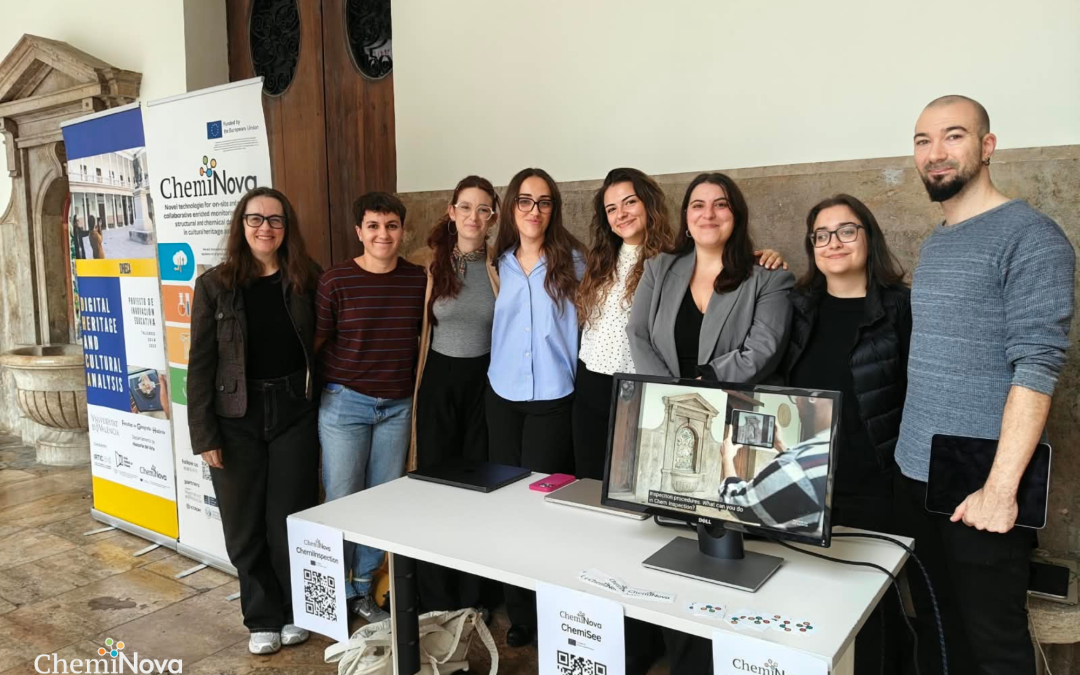
The ChemiNova workshop, entitled “From Technical Diagnosis to Citizen Action: ChemiNova Technologies (ChemiInspection and ChemiSee) for the Climate Resilience of the Universitat de València’s Heritage”, took place in the cloister of the Centre Cultural La Nau.
The activity focused on ChemiInspection and ChemiSee, two digital tools developed within the project, exploring their potential to support cultural heritage inspection, public engagement and resilience in the face of climate-related threats.
The workshop brought together contributions from researchers at the Universitat de València, including Ester Alba Pagán, Cristina Portalés Ricart, Álvaro Solbes García, Sergio Casas Yrurzum, Carmen Cano Sola, Esperanza Villuendas Ferri, Belén Palma Ruano, Laya Targa Hernández, Alejandro García Blaya, Marta Segovia Cobo, Lucía Bouzas Naya and Lucía Vera Mahiques.
By connecting technical assessment with citizen participation, the activity illustrated the importance of making digital heritage technologies accessible beyond specialised research environments.
Safeguarding contemporary art collections affected by the Valencia floods
Later that day, Marta Segovia Cobo presented the contribution entitled “Safeguarding Contemporary Art Collections Affected by the Valencia Floods through the ChemiNova Project: The Cases of Antonio Barroso and Francesc Sempere de Messa”.
The research was co-authored by Marta Segovia Cobo, Carmen Cano Sola, Álvaro Solbes García, Marisa Vázquez de Ágredos Pascual and Ester Alba Pagán, from the Universitat de València.
The presentation addressed the safeguarding of contemporary art collections affected by the devastating floods of 29 October 2024, focusing on the cases of Antonio Barroso and Francesc Sempere de Messa.
Through these case studies, the contribution highlighted the relevance of research undertaken within ChemiNova to the challenges of conserving cultural heritage affected by extreme weather events.
International cooperation and university heritage resilience
The 3rd Meeting of the Ibero-American Network of University Heritage brought together researchers, heritage professionals and representatives of cultural and academic institutions to examine the challenges facing cultural heritage in situations of emergency.
The event was coordinated by Marisa Vázquez de Ágredos Pascual, from the Universitat de València and Secretary of the Network, alongside Luis Méndez Rodríguez, from the University of Seville and President of the Network.
The programme addressed topics including preventive conservation, disaster response, climate resilience, community participation and international cooperation, drawing on experiences from Ibero-America and other regions.
The October 2024 floods in Valencia provided a particularly relevant context for reflecting on the responsibilities of universities in responding to cultural heritage emergencies and developing strategies for long-term safeguarding.
Through its workshop and scientific contribution, ChemiNova demonstrated two complementary dimensions of its research: the application of digital technologies to heritage inspection and public engagement, and the scientific study of artworks affected by climate-related disasters.
Both activities reinforced the importance of interdisciplinary collaboration in developing more resilient and inclusive approaches to cultural heritage protection.