
Novel technologies for on-site and remote collaborative enriched monitoring to detect structural and chemical damages in cultural heritage assets.
Our mission
In the 1960s, a chemical experimentation game called CHEMINOVA gained widespread popularity and inspired many individuals to pursue careers in science. The game came with all the essential tools to create a home laboratory, including test tubes, a burner for heating mixtures, clamps to hold tubes, and chemical products.
Named after and inspired by this game, ChemiNova project focuses on simplifying chemistry analysis and fostering collaborative conservation research while prioritizing humans as the central focus for technological innovations.
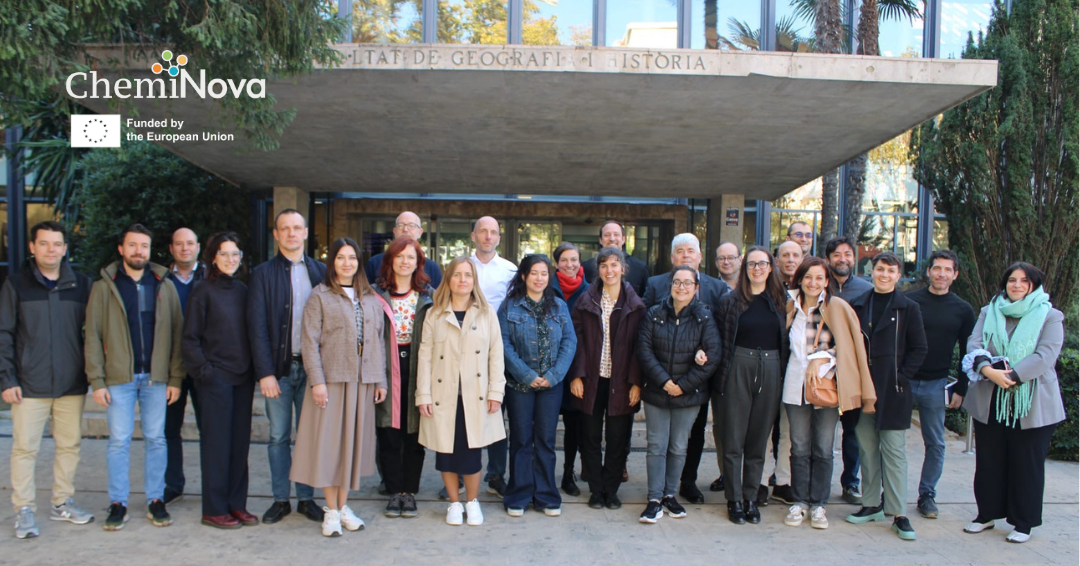
What if EU citizens collaborated with scientists to preserve cultural heritage? Could conservation professionals have actionable technologies, skills, and frameworks to enhance their efficiency?
Europe’s cultural heritage, a rich tapestry of traditions, monuments, and communities, forms the bedrock of our identity, well-being, and sense of belonging.
However, recent natural and human-induced disasters have posed significant threats. To bolster cultural heritage resilience against climate change and anthropogenic hazards, we must shift conservation practices toward holistic approaches.
ChemiNova aims to develop an intelligent computational system that surpasses current technologies, enhancing the conservation, analysis, and monitoring of European cultural assets. By leveraging diverse data, we will address structural and chemical damages, focusing on two specific threats: climate change and conflicts.
Our impact will extend beyond creating an ad hoc device; our technology is designed for universal accessibility.
We will actively engage local communities in conservation practices, encouraging citizen science participation and raising awareness about the effects of climate change and other hazards on cultural heritage.
Our primary objective is to develop innovative, cost-effective methods for both remote and on-site monitoring of CH assets. Leveraging existing technologies, we will provide conservation professionals with advanced analyses of structural and chemical damages resulting from human-induced threats.
Additionally, we will foster collaboration between heritage practitioners and non-experts, placing end-users at the heart of our tools and methods. ChemiNova adopts a modular approach, utilizing non-destructive and portable technologies that can adapt to diverse scenarios, monuments, buildings, and artifacts.
Our pilars

Cultural Heritage

Climate Change

Chemistry

Technology
PARTNERS
COUNTRIES
RESULTS
Our objectives
OB1: Develop novel and cost-effective ways for remote and on-site monitoring of CH assets.
We will reuse existing technologies to build a myriad series of optical non-invasive techniques for remote and on-site monitoring of CH damage assessment.
a) Focusing on data, rather than on specific hardware, to combine data coming from existing optical devices, which can be geometrically and radiometrically combined (ChemiModel), thus considering a constellation of acquisition technologies
b) Building an MR space (ChemiSensing) that allows collaboration of distant users in real time, and an AR app (ChemiInspection) that embeds condition reports. These technologies will aid practitioners to assess the optimal green and effective conservation strategies and material
c) Adapting and testing the envisaged technology on different pilots, which together include three working scales: monuments, buildings, and artefacts.
OB2: Develop advanced analysis of structural and chemical damages of CH due to human-induced threats.
We will introduce the concept of e3D models that allow a multidimensional and multi-hazard inspection of CH assets to classify effects and physiochemical damages, including surface pollution, and human-induced disasters.
a) Developing new methods and tools considering multi-dimensional representations of the object, supporting not only spatial information, but also spectral, photometric, semantic, and temporal. These 3D models will be called e3D models, where the “e” stands for“enriched” (ChemiModel)
b) Developing and implementing an integrated data linking and sharing framework so that the different types of data coming from different devices can work on complementary components of the same model(ChemiNova database and API)
c) Developing a software tool (ChemiAnalysis) capable of seamlessly integrating and analysing the results of different monitoring tasks, which will give precise information to end-users that can be processed in a manageable way and that will support an enhanced decision-making process
d) Developing methods based on deep learning to automatically detect types of damages on CH assets due to climate change and other human-induced threats (ChemiAI).
OB3: Integrate data of previous interventions to allow its analysis and comparison at different moments.
a) Generating e3D models which include the temporal dimension to allow the comparison of the objects in different moments; through theChemiAnalysis tool, the analysis could be made considering different time intervals.
b) Considering pilot studies that bring existing data of previous interventions, and also acquiring new data at different moments during the project life.
c) Making this data findable, accessible, interoperable, and reusable (especially by already taking into account the ECCCH). Our data will assist users in analysis, diagnosis, and decision-making by monitoring monuments, buildings, and artefacts with a long-term perspective.
d) Using ChemiInspection, experts would be able to see augmented visualizations of the damages of CH assets in situ, which can refer to different moments, thus comparing the current.
e) Integrating conditions reports on the ChemiNova database, so the outcomes of inspections at different moments could be easily compared.
OB4: Involving heritage practitioners and non-experts in conservation processes, while considering end-users at the centre of our tools and methods.
a) Focusing on end-users and encouraging capacity building for conservation professionals, especially for small and medium-sized institutions which do not have access to conservation data and/or advanced (and expensive) technologies. Our approach will be adaptable, portable, and sustainable.
b) Our tools and methods will be developed closely together with actively involved representative target users and stakeholders. Their involvement will provide a global outlook, ensuring that ChemiNova’s activities and results are relevant to diverse heritage conservation practices and audiences. This will promote the use of a comprehensive and interdisciplinary approach to conservation decision-making and will result in the development of processes that involve a holistic and multidisciplinary perspective to conservation decisions
c) Working together with citizens in collaborative forms of research and innovation, not only as co-assessment of our activities but also as co-creation by involving citizens directly in data acquisition. They might not be conservation experts but have access to monuments, buildings, and/or artefacts thanks to immersive experiences. Through citizen science, local communities can take part in conservation research.
d) Raising awareness among citizens on the effects of chemical damages produced by climate change and civil conflicts to CH. From middle-schools to universities, from grassroots associations to policymakers. ChemiNova will offer a range of open events, city games, treasure hunts, etc., to engage citizens.
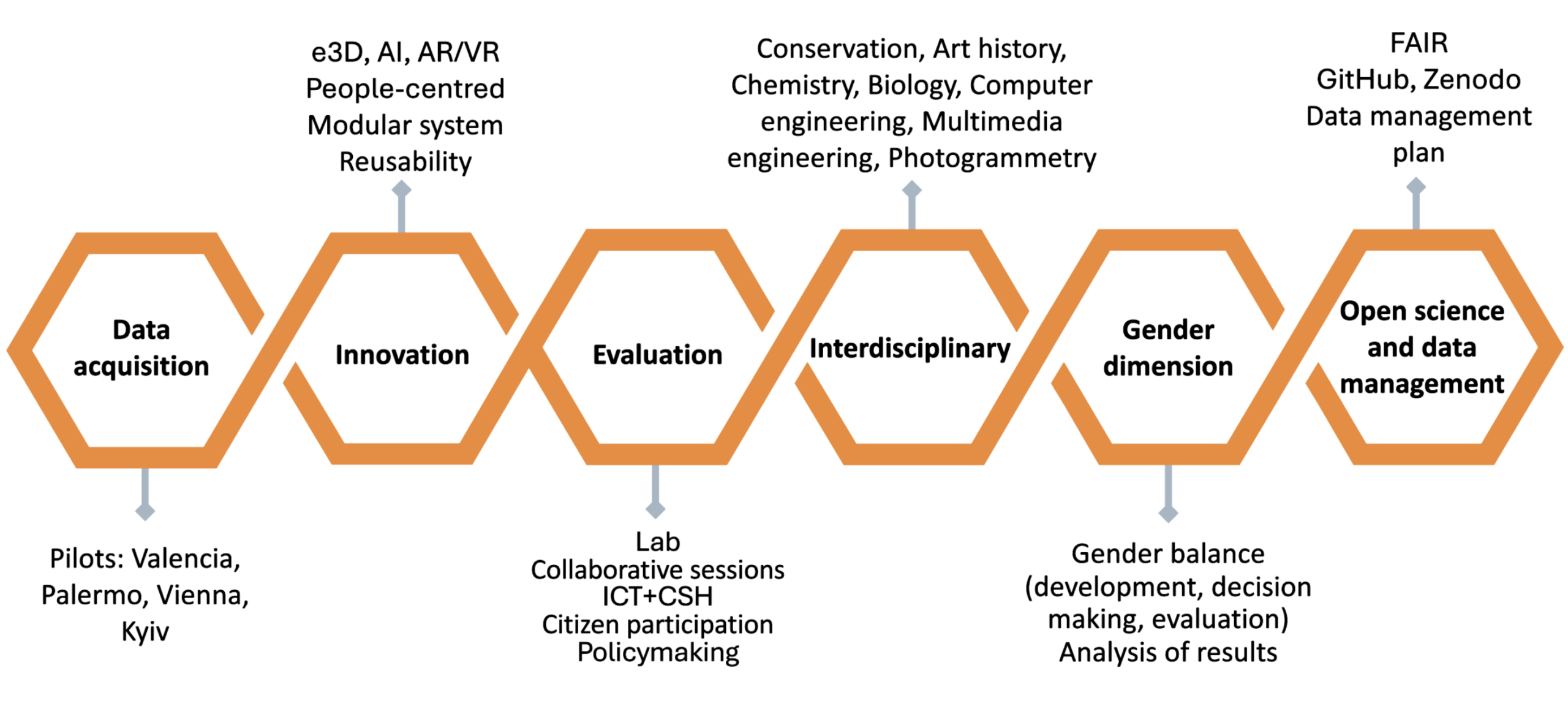
Our methodology
Our target audience
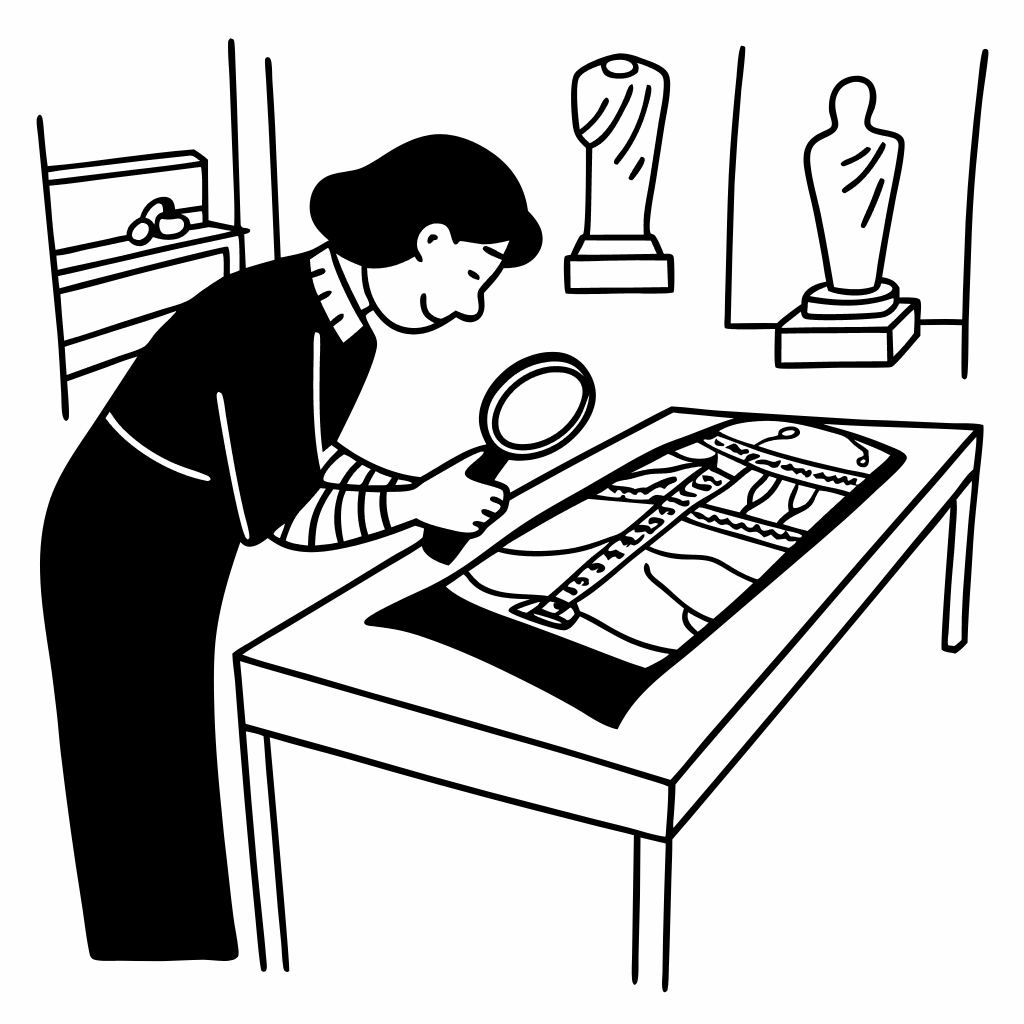
CONSERVATORS
INTERNATIONAL CH INSTITUTIONS
ICT SECTOR

INTERNATIONAL CH ORGANIZATIONS

POLICYMAKERS
HIGHER EDUCATION

CIVIL SOCIETY
Impact
The full potential of cultural heritage, arts, and cultural and creative sectors as a driver of sustainable innovation and a European sense of belonging is realised through a continuous engagement with society, citizens, and economic sectors as well as through better protection, restoration and promotion of cultural heritage.
Outcomes
Outcome 1
New and innovative remote methods to monitor the state of degradation of original materials of cultural heritage monuments, buildings and artefacts.
Outcome 2
Innovative on-site monitoring methods of pollutants and the status of previous interventions in cultural heritage buildings, monuments, and artefacts in order to select the optimal green and effective conservation strategies and material.